Choosing the right photovoltaic panel can feel overwhelming. Industry expert Dr. Emily Green often states, "Selecting the best panels requires understanding your energy needs." With advancements in solar technology, options abound. Each photovoltaic panel type offers unique benefits.
Quality matters when it comes to panels. Some may focus on price over performance, which can lead to regrets. Effective panels should fit your specific requirements. Factors such as efficiency, durability, and warranty are essential. Make a checklist to guide your decision.
Not all panels are created equal. Reading reviews and comparing different brands can reveal hidden insights. You may find some products look good on paper but underperform in real life. Engaging with professionals can help clarify the best options for your requirements. Choosing the right photovoltaic panels isn't just a purchase; it’s an investment in sustainable energy.
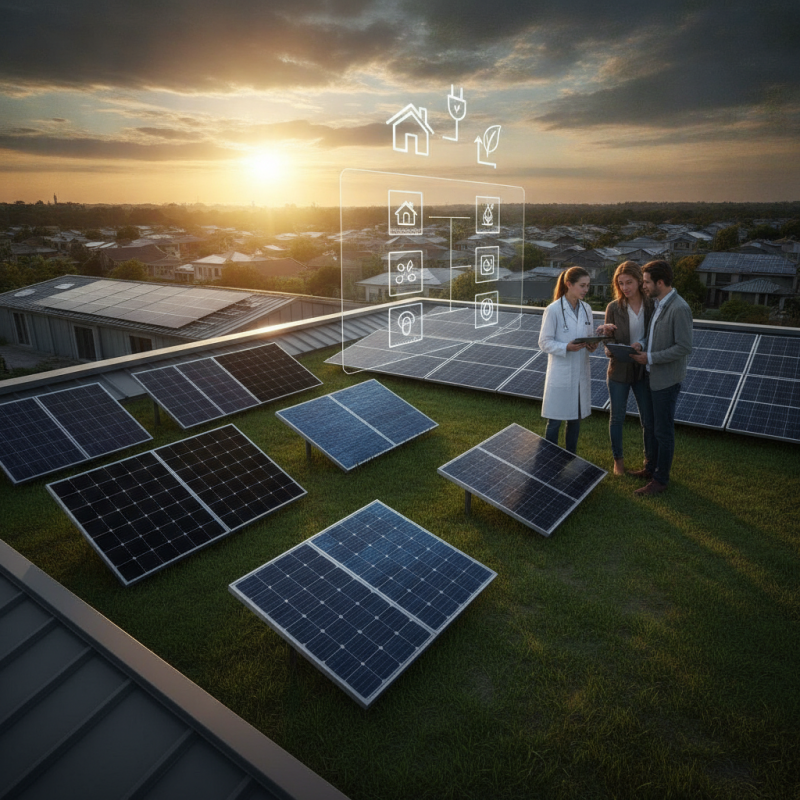
When considering photovoltaic panels, it’s crucial to reflect on your specific energy needs and goals. Assess how much electricity you use monthly. Look at past utility bills. This reveals patterns and peak usage times. Knowing this helps in selecting the right panel capacity.
Consider your location too. Different regions receive varying sunlight exposure. A sunny area may benefit from panels with higher efficiency. This means fewer panels are needed to meet energy goals. Don’t overlook future needs either. Are you planning to expand your home or increase energy usage? Thinking ahead can save you from costly upgrades later.
Think about the balance between cost and efficiency. Higher efficiency panels usually mean higher upfront costs. Calculate long-term savings against initial investments. It’s not just about the immediate outlay. Get quotes from different installers. This step may expose inconsistencies in pricing. Finally, be mindful of warranties and support. A dependable installation service ensures your investment is protected.
When evaluating photovoltaic technologies, it's critical to understand the primary types available. Crystalline silicon (c-Si) is the most common option, holding a market share of around 90%. Its efficiency often ranges from 15% to 22%. This technology benefits from mature manufacturing processes, but can be costly. Amorphous silicon (a-Si), though less efficient at 6% to 10%, offers flexibility in applications. It may excel in low-light conditions.
Thin-film technologies, including cadmium telluride (CdTe) and copper indium gallium selenide (CIGS), present further choices. CdTe typically achieves efficiencies of 9% to 11%, while CIGS can achieve around 12% to 14%. These options tend to have a lower production cost but may require more space for installation. The choice between these technologies often hinges on specific project needs.
Beyond efficiency, durability is vital. For instance, c-Si panels usually have a lifespan of 25 years or more, whereas thin-film panels may last around 20 years. Research from the National Renewable Energy Laboratory indicates that degradation rates vary significantly across technologies. Understanding these factors is essential for making an informed decision. Each technology has its advantages and limitations, thus requiring thorough consideration.
Choosing the right photovoltaic panel involves understanding important performance metrics. Efficiency ratings are critical. They indicate how much sunlight is converted into usable energy. Higher efficiency means more power from the same space. This is especially essential for smaller installations where space is limited.
Consider the panel's temperature coefficient as well. This measures performance under heat. A lower coefficient is better. It means the panel generates more electricity on hot days when performance can drop for others.
**Tip:** Look for panels with performance warranties of at least 25 years. This warranty often reflects the manufacturer's confidence in their product.
Also, pay attention to degradation rates. Panels lose efficiency over time. A lower degradation rate means the panel will perform well for longer. Investigating these factors can guide you to a well-performing system that meets your needs.
**Tip:** Measure your energy demand accurately before selecting panels. An incorrect assessment may lead to oversizing or undersizing your system. Taking precise calculations is essential for optimal performance.
When choosing photovoltaic panels, cost is a paramount concern. The upfront investment can seem daunting. For instance, studies show that the average cost of solar panels ranges from $15,000 to $25,000 for residential systems. However, many homeowners overlook long-term savings. According to the U.S. Department of Energy, solar power can save homeowners around $30,000 to $40,000 over 20 years. This savings can significantly offset the initial costs.
Analyzing energy costs reveals more insights. The average cost of electricity in the U.S. is around $0.13 per kWh. In contrast, solar panels can reduce or eliminate these costs, depending on system size and location. The National Renewable Energy Laboratory estimates that going solar can lead to a savings of 70% or more on energy bills. These numbers encourage potential buyers to weigh initial costs against future savings.
However, the decision isn't straightforward. Factors such as geographical location, sunlight exposure, and available incentives must be considered. Some regions offer substantial tax credits, further improving cost efficiency. Others do not. This inconsistency can lead to confusion. A deeper understanding of personal energy needs is crucial. It can guide the decision-making process in choosing the right photovoltaic panel.
When selecting photovoltaic panels, installation options and warranty terms significantly affect performance and long-term investment. Quality installations ensure panels operate at peak efficiency. Reports indicate that improper installation can reduce energy output by up to 30%. Choosing a certified installer can mitigate these risks. Look for professionals with extensive experience in solar technology to ensure reliability.
Warranties vary among manufacturers but typically range from 10 to 25 years. A longer warranty often reflects confidence in the product's durability. Research suggests that panels with 25-year warranties can maintain 80% of their original capacity at the end of the term. Check if the warranty covers the performance degradation over time. Some warranties only cover defects, which may not aid in long-term energy production.
Additionally, consider the types of warranties available. A performance warranty guarantees a certain level of efficiency over time, while a product warranty covers defects. Balancing these options will provide greater peace of mind. Remember, even the best panels will underperform without quality installation and robust warranties. The pursuit of optimal energy production requires thoughtful consideration of these factors.
: The primary types include crystalline silicon, amorphous silicon, and thin-film technologies. Each has unique characteristics.
Crystalline silicon typically ranges from 15% to 22% efficiency, making it the most commonly used option.
Amorphous silicon is flexible and works well in low light but has lower efficiency, ranging from 6% to 10%.
Cadmium telluride and copper indium gallium selenide offer lower efficiencies but are generally less expensive. They require more space.
Durability affects the lifespan and performance. Crystalline silicon panels usually last over 25 years; thin-film panels last around 20 years.
Quality installation is critical; poor installation can reduce energy output by up to 30%. Choose certified professionals.
Warranties vary from 10 to 25 years. Longer warranties usually indicate greater manufacturer confidence in durability.
A performance warranty guarantees a specific efficiency over time, while a product warranty covers defects.
Focus on quality installation and choose warranties that cover performance degradation, not just defects. Balance options wisely.
Yes, even the best panels may underperform without proper installation. Reflect on your choices carefully to avoid loss.
When choosing the best photovoltaic panel for your energy needs, it's essential to first understand your specific energy goals and consumption patterns. This foundational step helps identify which type of photovoltaic technology—whether monocrystalline, polycrystalline, or thin-film—will suit your requirements most effectively. Next, evaluating the efficiency ratings and performance metrics of various panels enables you to compare their output and reliability over time.
Cost is another crucial factor to assess, particularly in relation to long-term savings. While some photovoltaic panels may have higher upfront costs, their potential for greater efficiency and longevity can lead to substantial savings on energy bills in the future. Lastly, selecting the right installation team and understanding warranty options is vital to ensure that you maximize the benefits of your chosen photovoltaic panel. By addressing these key considerations, you can make an informed decision that aligns with your energy needs and financial goals.

Linde Cable