How to Choose Electrical Wire and Cable?

Time:2026-11-25 Author:Liam
0%

Choosing electrical wire and cable is not just a matter of picking a size from a shelf. The right choice depends on current, voltage, circuit length, installation conditions, and the equipment being connected. A cable that looks sturdy may still overheat if its conductor is undersized or its insulation is unsuitable. Small details matter.

This guide explains how to assess Wire Electrical Cable options with practical checks in mind. You will learn how conductor material, wire gauge, insulation type, and temperature ratings affect performance. For example, a long cable run to a workshop may need a different size than a short connection inside a control panel. Moisture, sunlight, vibration, and tight conduit can also change what is appropriate. There is no universal best cable.

Reliable selection starts with the equipment manufacturer’s specifications and the cable’s product data. Check the rated current, voltage, temperature range, and permitted installation method. Then consider voltage drop, especially on longer runs. A label alone may not tell the whole story. When requirements are uncertain, confirm them with a qualified electrical professional rather than relying on appearance or guesswork. I have seen a neat-looking installation hide a poor fit; that is worth remembering. This overview offers a careful starting point, not a substitute for project-specific verification.
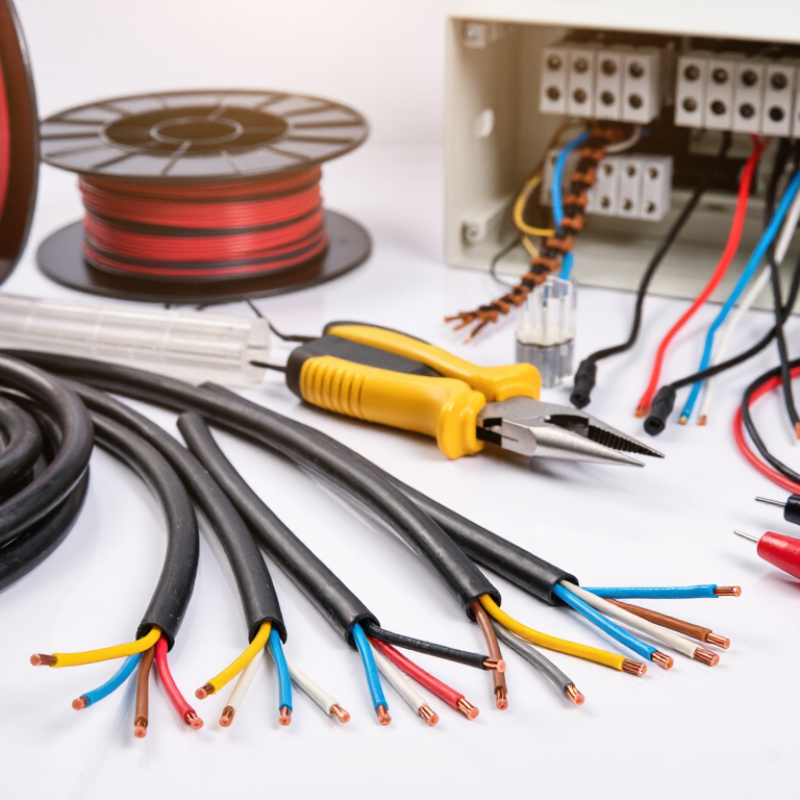
How to Choose Electrical Wire and Cable?

Determine the Electrical Load and Application

Before choosing a wire or cable, identify the equipment’s voltage, rated current, and expected operating time. Add the loads that may run simultaneously, not just the largest appliance. Motors need extra attention because starting current can briefly exceed running current. The U.S. Department of Energy’s 2021 U.S. Industrial and Commercial Motor System Market Assessment Report estimates that motor systems use 54% of electricity in U.S. manufacturing. That scale makes motor load and duty cycle important parts of cable selection. Small details matter.

Next, match the cable to its actual route and surroundings. A conductor in a warm ceiling, a crowded conduit, or a damp outdoor location may need a different insulation rating or ampacity than one in open air. Check conductor material, installation method, ambient temperature, and grouping with other loaded cables. Voltage drop matters on long runs, too: the 2023 NFPA 70 National Electrical Code gives informational guidance of 3% for a branch circuit and 5% combined for feeder and branch circuits. Do not guess.

A practical check is to compare the equipment nameplate with the circuit design, then verify the applicable code tables and manufacturer installation instructions. If the load cycles, starts heavily, or may expand, record those assumptions before sizing. I would revisit them; real use rarely matches a neat spreadsheet perfectly. Have a qualified electrical professional confirm the final selection, especially where several loads share a circuit.

Choose the Conductor Material and Wire Gauge

Conductor Material Choosing conductor material begins with the job, not the price tag. Copper carries current efficiently and bends readily, making it common in household circuits and compact equipment. It is heavier and often costs more. Aluminum weighs less and can suit larger feeders, but it requires compatible terminals and careful installation. Connections matter.

Wire Gauge & Capacity Wire gauge describes conductor size. In the American Wire Gauge system, a smaller number means a thicker wire. Thicker conductors generally have lower resistance and can carry more current under comparable conditions. Yet gauge alone does not determine safe capacity. Insulation rating, ambient heat, bundled cables, installation method, and circuit protection all affect the choice. Long runs may also need a larger conductor to limit voltage drop, particularly when motors start or loads fluctuate.

I would not choose a wire from a chart without checking its assumptions. A cable in open air is not equivalent to one packed beside warm conductors. That difference is easy to overlook. Check the equipment instructions and applicable electrical requirements, then have a qualified electrician verify fixed wiring and terminations. When uncertain, pause before energizing the circuit.

Select Insulation and Cable Construction

Choosing insulation and cable construction starts with the conditions around the wire. Will it sit in a dry wall cavity, a damp basement, or a hot equipment enclosure? These details affect insulation type, temperature rating, and resistance to moisture or chemicals. PVC insulation suits many general indoor applications, while cross-linked polyethylene is often selected where higher heat resistance is needed. Always check the cable’s marked ratings against the equipment and installation conditions. A label can look reassuring, but it cannot correct a poor match.

Construction matters, too. Solid conductors stay put in fixed installations, while stranded conductors bend more easily around tight routes. A thicker jacket may add mechanical protection, yet it can make pulling cable through a crowded conduit harder. Shielding can help reduce electrical interference in sensitive signal circuits, but it is not necessary for every run. Small details count. I have found that choosing by appearance alone is an easy mistake; the actual environment deserves more attention.

Tips: Check temperature, moisture, sunlight, and abrasion exposure before selecting a cable. Confirm conductor size and insulation ratings with the equipment documentation. If the route includes sharp edges or frequent movement, consider suitable protection and a flexible construction. When ratings are unclear, pause and ask a qualified electrician. Better to verify than guess.

Check Voltage, Temperature, and Environmental Ratings

How to Choose Electrical Wire and Cable?

Check Voltage, Temperature, and Environmental Ratings

Begin with the equipment’s voltage and current requirements, then check the cable’s marked ratings. Voltage rating must meet or exceed the system voltage. Current capacity depends on conductor size, insulation, installation method, and how many conductors carry current together. A cable that looks sturdy may still be unsuitable. Read the markings.

Temperature ratings matter at both ends of the job. A cable near a warm motor, heater, or packed ceiling space may face higher temperatures than the room itself. Compare the insulation rating with the expected operating temperature, and account for heat from nearby conductors. A small detail, but it can change the choice. I still find temperature estimates easy to underestimate when conditions vary during the day.

Environmental ratings should match the actual route. Outdoor runs may need protection from sunlight and rain; damp locations call for cable rated for moisture exposure. In a workshop, oil, abrasion, or cleaning chemicals may also matter. Check whether the cable is approved for conduit, burial, or flexible movement rather than assuming one type suits every route. Inspect the full label and installation guidance, and ask a qualified electrician when the conditions or load are uncertain.

Confirm Installation Requirements and Electrical Codes

Before choosing electrical wire or cable, confirm how and where it will be installed. Check the circuit voltage, expected load, and breaker rating. Then verify the conductor size and insulation are suitable for that load and the surrounding temperature. A cable passing through a warm attic may need different consideration from one installed in a dry, finished room. Moisture, sunlight, physical damage, and installation inside conduit can also affect the right choice. Small details matter.

Check the electrical codes adopted by your local authority, including rules for permits, approved cable types, and installation methods. Requirements can vary by location and building type, so a general online chart is not enough. For a renovation, inspect the existing wiring and note its markings, route, and condition. If anything is unclear, ask a licensed electrician or local inspector before buying materials. It is easy to focus on price and overlook a code requirement; I would not assume an older installation is a reliable guide.

Tips: Read the cable jacket markings before purchase. Match them to the installation environment and local code. Keep a photo of the circuit panel and cable route for reference. If the plan changes on site, pause and recheck the requirements. That extra check can feel fussy, but guessing about wire size or cable rating can create overheating risks and costly rework.

How to Choose Electrical Wire and Cable? - Confirm Installation Requirements and Electrical Codes

Installation Requirement What to Confirm Selection Guidance Code and Safety Check
Indoor, dry, fixed wiring Whether the wiring is concealed in walls, installed in an approved raceway, or run in another permitted wiring method. Use a conductor or cable type listed for the specific wiring method and location. Do not assume that a cable suitable for dry indoor use is suitable outdoors or underground. Check the locally adopted electrical code and the applicable wiring-method requirements. In the United States, common references include NEC Articles 300, 310, and 334.
Damp or wet locations Whether the location can be exposed to rain, water, condensation, or dampness, including inside raceways in wet locations. Select conductors and cable assemblies marked or listed for the actual wet- or damp-location conditions. A raceway alone does not make an unsuitable conductor suitable for a wet location. Verify location ratings, enclosure requirements, and the adopted code. NEC Article 310 includes requirements for conductors in wet locations.
Direct burial or underground installation Whether the wiring will be buried directly, placed in a raceway underground, or exposed to moisture and soil conditions. Use a wiring method specifically approved for direct burial or the intended underground installation. Confirm burial depth and mechanical-protection needs for the site. Check local rules for burial depth, warning tape, raceway use, and protection from physical damage. Requirements can vary by installation and jurisdiction.
Outdoor exposure and sunlight Exposure to ultraviolet light, weather, temperature changes, and possible physical damage. Choose wiring identified as suitable for the exposure, including sunlight resistance where required. Add approved protection where the cable could be damaged. Confirm outdoor-location and physical-protection requirements in the adopted code; do not rely on appearance alone to determine a cable’s rating.
High ambient temperature or heat sources Expected ambient temperature and proximity to equipment, roofs, heating appliances, or other sources of heat. Check the conductor insulation temperature rating and apply required ampacity adjustments or corrections. The allowable ampacity may be lower than a basic table value. Use the applicable conductor ampacity tables and adjustment/correction rules in the locally adopted code. NEC Article 310 is a common U.S. reference.
Conduit, bundled cables, or thermal insulation Number of current-carrying conductors, conduit fill, grouping, and whether wiring is surrounded by thermal insulation. Account for heat buildup, conductor derating, and raceway fill before choosing conductor size. Do not size solely by the circuit breaker rating. Check the adopted code’s ampacity adjustment and raceway-fill rules, as well as equipment and terminal limitations.
Load, circuit voltage, and run length Load current, continuous-load status, supply voltage, one-way circuit length, and acceptable voltage drop. Size conductors for the calculated load and installation conditions. A longer run may require a larger conductor to limit voltage drop. Confirm overcurrent protection, conductor ampacity, and applicable voltage-drop guidance. Voltage-drop recommendations and mandatory requirements depend on the code and application.
Conductor material and terminations Whether the conductor is copper or aluminum, and whether the devices and terminals are listed for that material and conductor size. Use compatible, properly rated terminals and follow the equipment instructions for conductor preparation and tightening torque. Do not mix materials at a terminal unless it is approved for that use. Verify conductor markings, terminal ratings, and manufacturer instructions; follow the adopted code’s connection and installation rules.
Grounding and bonding Required equipment grounding path, conductor size, circuit arrangement, and connection points. Provide the grounding and bonding conductors or approved wiring method required for the installation. A neutral conductor is not a substitute for an equipment grounding conductor where one is required. Check the locally adopted code’s grounding and bonding requirements. NEC Article 250 is a common U.S. reference.
Flexible connections and moving equipment Whether the wiring must bend repeatedly, connect to portable equipment, or tolerate vibration or movement. Use a flexible cord or cable specifically rated for the equipment and conditions; ordinary building cable is not automatically suitable for flexible use. Confirm permitted uses, length, strain relief, and protection requirements under the adopted code and equipment instructions.

Important: Wire and cable selection depends on the complete installation, load calculation, equipment ratings, and locally adopted electrical code. Code editions and local amendments differ. Have a qualified electrical professional verify conductor sizing and installation requirements before work begins.

FAQS

What should I check before choosing a cable?

Check the equipment’s voltage, rated current, and expected operating time. Include loads that may run together, not just the largest appliance. Small details matter.

Why do motor loads need extra attention?

Motors can draw more current when starting than while running. Note how often the motor starts and how long it operates. I sometimes underestimate that starting demand.

How does the cable route affect the choice?

Warm ceilings, crowded conduits, and damp outdoor routes can change the cable’s current capacity or insulation needs. Check the installation method and nearby heat sources.

What ratings should I read on the cable?

Match its voltage rating to the system voltage. Check its current capacity, temperature rating, and environmental markings. A sturdy-looking jacket proves little.

When does voltage drop matter?

It matters on long cable runs. Use the applicable electrical-code guidance and circuit design rather than guessing from cable appearance.

What environmental conditions should I consider?

Outdoor routes may face sunlight and rain. Workshops may expose cable to oil, abrasion, or cleaning chemicals. Check whether it is rated for the actual conditions.

Why should I check local electrical requirements?

Local rules may specify approved cable types, permits, and installation methods. Requirements vary by location and building type. An online chart may not be enough.

What should I do if the wiring plan changes?

Pause and recheck the load, route, cable markings, and local requirements. Keep a photo of the panel and cable path. Ask a qualified electrician if anything remains unclear. I would not rely on old wiring as a perfect guide.

Conclusion

Choosing the right Wire Electrical Cable starts with understanding the electrical load and how the cable will be used. Consider the equipment’s power requirements, operating conditions, and whether the installation is intended for a fixed or flexible application. Then select a conductor material and wire gauge suited to the expected current, cable length, and acceptable voltage drop. Proper sizing helps support reliable operation and reduces the risk of overheating.

Next, match the insulation and cable construction to the installation environment. Check that voltage and temperature ratings are appropriate, and account for exposure to moisture, heat, chemicals, sunlight, or physical wear where relevant. Finally, confirm that the cable’s construction and installation method meet applicable electrical codes and project requirements. Reviewing these factors together helps ensure the selected cable is suitable, durable, and safe for its intended use.


Liam

Liam

Liam is a dedicated marketing professional with a profound expertise in the industry, where he excels at highlighting the unique advantages of our core products. With a keen understanding of market trends and consumer needs, Liam frequently updates our company’s professional blog, providing......