Selecting electrical cable and wire is not just a matter of choosing a size that fits. The right product depends on its intended use, conductor material, insulation, voltage rating, and installation environment. Cable Electrical Wire may describe related products, but a single insulated conductor and a cable containing several conductors are not always interchangeable. Check the product datasheet. Look closely at the printed markings, too. A spool in a shop can appear suitable, yet its temperature rating or construction may not match the job. Small details matter.
This guide introduces ten common types buyers may encounter, from building wire and flexible cord to coaxial and armored cable. Each serves different applications. We’ll explain typical uses and the features worth checking before purchase, such as conductor size, insulation type, and resistance to moisture or abrasion. No cable fits every project. Installation conditions can change the choice, sometimes more than the label suggests. That is easy to overlook. Compare manufacturer specifications, and follow applicable electrical codes and qualified professional guidance for your location. For demanding or unfamiliar installations, consult a licensed electrician rather than relying on appearance alone. The list is a starting point, not a substitute for project-specific review. Even experienced buyers can miss a mismatch when they shop in a hurry.
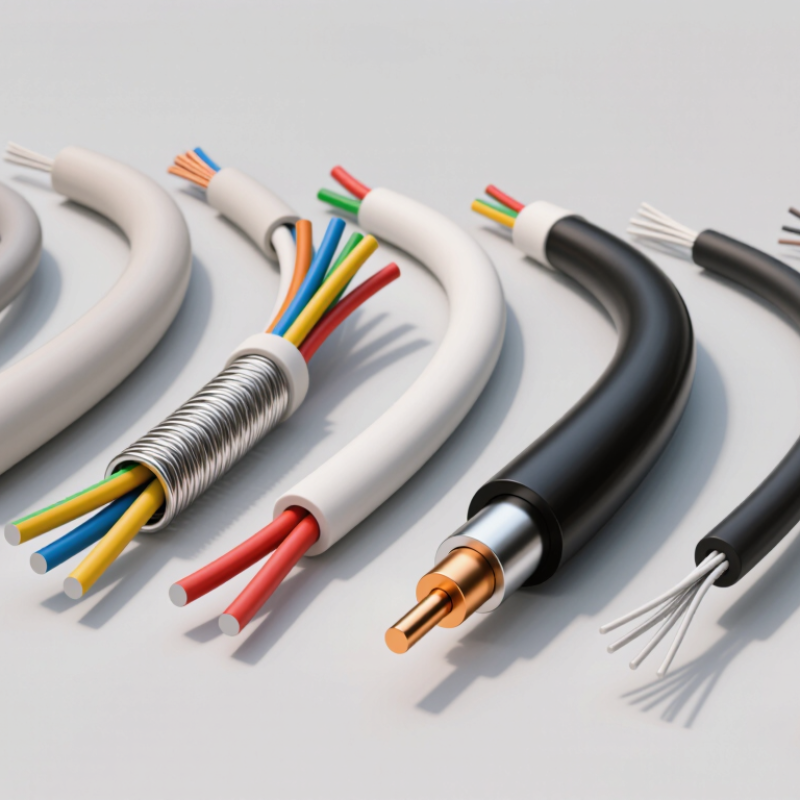
Buyers often use “wire” and “cable” as if they mean the same thing. They do not always. Wire usually refers to one conductor, bare or insulated; cable generally groups multiple conductors inside a shared sheath. Picture a single copper lead in a control panel beside a jacketed cord powering a pump. The distinction is useful, but not absolute: trade usage and product standards can vary. Check the product markings and specifications, not just the sales label. Labels matter.
Selection depends on conductor size, voltage, insulation temperature rating, moisture exposure, and whether the installation moves or stays fixed. An outdoor feeder may need a wet-location rating; a machine lead may need strands that tolerate repeated bending. Thickness alone tells you little.
NFPA’s Home Structure Fires report estimated an annual average of 32,620 U.S. home fires involving electrical distribution or lighting equipment during 2015–2019. That category is broader than wire and cable, so it is not a cable-failure count.
Still, it shows why ratings and secure terminations deserve attention. One detail buyers can miss: routing conditions change what “suitable” means.
When comparing electrical cable and wire, start with the conductor, not the product name. Copper and aluminum differ in conductivity, weight, and termination needs. Check the stated conductor size in mm² or AWG, and confirm it matches the equipment terminals. Small details matter.
Next, compare rated voltage, operating temperature, and insulation material. PVC, XLPE, and rubber-based insulation tolerate different heat, moisture, and chemical conditions. A cable near a warm motor may need a higher temperature rating than one inside a cool control panel. Check the actual route. Indoor, outdoor, buried, and moving installations can call for different jacket and protection properties. Flexibility matters too: stranded conductors usually bend more easily than solid ones, but the application determines the right choice.
Look for the applicable test standard and clear documentation, including conductor class and permitted temperature range. Compare current capacity only under similar installation conditions; bundling and ambient heat can reduce it. A datasheet may leave details unclear. Ask for clarification before ordering, especially when comparing equivalent cable sizes. That distinction matters. I’ve seen buyers focus on price, then discover the selected cable is awkward to route or terminate. A quick check against the actual load, environment, and installation method can prevent that mismatch.
Choosing cable starts with the route, load, and environment. Nonmetallic-sheathed NM-B cable is common for indoor residential circuits in dry locations. UF-B has a moisture-resistant construction for approved outdoor or underground use. It still needs installation suited to the site. Details matter.
THHN/THWN-2 and XHHW-2 are insulated conductors often pulled through conduit. Their temperature and wet-location ratings differ, so check the markings. Metal-clad MC cable protects insulated conductors with a metal covering. Armored AC cable also has metal protection, but its construction and permitted uses are not identical. Never treat them as interchangeable by appearance alone.
Service-entrance SE cable is used for certain above-ground service or feeder applications; USE cable is rated for underground service applications. Local rules and equipment instructions determine where each is allowed. Coaxial cable carries radio-frequency signals, while twisted-pair cable commonly serves data or control circuits. These are not general-purpose power cables. I have seen selection reduced to “the wire that fits,” and that shortcut deserves a second look. Confirm conductor size, insulation rating, grounding needs, and installation conditions with a qualified professional.
Indoor wiring often uses nonmetallic-sheathed cable, commonly called NM-B, inside dry, enclosed walls. It suits outlets, switches, and lighting circuits in many homes. Not outdoors. For damp or underground routes, UF-B cable has a solid outer jacket designed for those conditions, though burial depth and protection depend on local requirements.
THHN/THWN-2 conductors are often pulled through conduit in commercial buildings, garages, and service areas. The conduit protects individual wires and makes routing easier to inspect. Metal-clad cable is another option for some interior runs, especially where its metal armor adds physical protection. For a home’s feeder connection, service-entrance cable may be used between approved equipment. Details matter.
Flexible cord serves a different job. SOOW cord commonly powers portable tools and equipment in workshops or on job sites; it is not a substitute for fixed building wiring. Low-voltage landscape cable runs to outdoor lighting, while coaxial cable carries television or internet signals. Fiber-optic cable carries data as light, not household power. Easy to mix up. Cable markings, conductor size, temperature rating, and installation location all affect suitability. Even familiar names can be misleading, so buyers should check product specifications and have a qualified electrician confirm the selection for the actual route and load.
| Cable or Wire Type | Typical Construction | Typical Uses | Buyer Considerations |
|---|---|---|---|
| 1. Nonmetallic-Sheathed Cable (NM-B) | Insulated copper conductors enclosed in a flexible nonmetallic jacket. | Branch-circuit wiring in many dry, concealed residential locations, subject to local electrical codes. | Not generally intended for wet locations or direct burial. Confirm conductor size, circuit rating, and local code requirements. |
| 2. Armored Cable (AC) | Insulated conductors protected by an interlocked metal armor; construction varies by cable type. | Some indoor branch-circuit installations where mechanical protection is useful and the cable is permitted by code. | Armor does not automatically make a cable suitable for wet, corrosive, or direct-burial conditions. Check its listing and fittings. |
| 3. Metal-Clad Cable (MC) | One or more insulated conductors inside a metal sheath, often with an equipment grounding conductor. | Commercial and industrial branch circuits, feeders, and exposed runs where an approved metal-clad wiring method is required or preferred. | Confirm the exact cable rating, grounding arrangement, environmental suitability, and compatible connectors. |
| 4. Underground Feeder Cable (UF-B) | Moisture-resistant cable with insulated conductors and a durable outer jacket designed for specified underground applications. | Outdoor branch circuits and certain direct-burial runs, when installed according to the cable listing and local code. | Check burial-depth rules, circuit requirements, physical-protection needs, and whether a raceway is required at exposed sections. |
| 5. THHN/THWN-2 Building Wire | Single insulated copper or aluminum conductor; THWN-2-rated versions are marked for wet or dry locations within their temperature rating. | Wiring in conduit or other approved raceways in residential, commercial, and industrial installations. | Typically installed in an approved wiring method rather than exposed as a standalone cable. Verify conductor material, ampacity, and raceway fill. |
| 6. Flexible Cord (such as SOOW) | Flexible, stranded conductors with a tough jacket; ratings vary, and some types are marked for oil, water, or outdoor exposure. | Portable equipment, tools, temporary connections, and machinery connections where flexible cord is allowed. | Choose the correct voltage, temperature, environmental, and flexibility ratings. Flexible cord is not a general substitute for fixed building wiring. |
| 7. Tray Cable (TC) | Multi-conductor cable with insulation and an outer jacket designed for approved cable-tray applications; ratings differ by type. | Power and control wiring in industrial facilities, especially in cable trays and other permitted wiring systems. | Confirm tray, sunlight, wet-location, flame, and direct-burial ratings as needed; not every tray cable is suitable for every environment. |
| 8. Service-Entrance Cable (SE/SER) | Assembly of insulated conductors with an outer jacket; conductor count and construction depend on the specific type. | Certain service, feeder, or subpanel connections where the cable type and installation method are permitted. | SE and SER constructions are not interchangeable for every use. Verify application, conductor configuration, exposure, and code requirements. |
| 9. Coaxial Cable | Central conductor, dielectric insulation, conductive shield, and outer jacket designed to carry high-frequency signals. | Television, radio-frequency, broadband, antenna, and other signal connections, depending on cable specifications. | Match impedance, frequency range, shielding, connector type, and outdoor rating to the system. |
| 10. Twisted-Pair Data Cable (for example, Cat 6) | Pairs of insulated copper conductors twisted to reduce interference; may be unshielded or shielded. | Ethernet networks, structured cabling, and certain data or communications systems within the cable's specified performance limits. | Consider category, installation length, shielding, fire rating, and whether the cable is intended for indoor, outdoor, or plenum spaces. |
Note: Cable names, ratings, and permitted uses vary by jurisdiction and product construction. Select cable based on the installation conditions, applicable electrical code, and the cable's markings; consult a qualified electrician when needed.
Choosing a cable starts with the job, not the price tag. Write down the voltage, expected current, cable length, and equipment requirements. A short indoor lighting run has different needs from a long outdoor pump connection. Check the installation method too: conduit, buried routes, and exposed spaces can require different insulation and protection.
Match the cable type to its environment. THHN/THWN conductors are commonly used in raceways, while UF cable is designed for approved direct-burial applications. Twisted-pair cable suits many data links; coaxial cable carries certain radio-frequency signals. These are not interchangeable. A damp corner, hot attic, or sharp metal edge can change the right choice. Small details matter.
Sizing needs care. Higher current and longer runs can increase heating or voltage drop, so verify conductor size against reliable tables and applicable local requirements. Do not guess from appearance. I would also check terminal compatibility; a conductor that fits poorly can create trouble later. For uncertain loads, unusual conditions, or fixed wiring, ask a qualified electrician to review the plan. One overlooked detail can be costly.
Wire usually has one conductor. Cable generally groups several conductors inside a shared sheath. Trade usage can vary, so check product markings.
Check whether the conductor is copper or aluminum, then confirm its size in mm² or AWG. Match it to the equipment terminals.
PVC, XLPE, and rubber-based insulation handle heat, moisture, and chemicals differently. A lead near a warm motor may need a higher temperature rating.
Not by itself. Voltage, current capacity, insulation, route, and installation conditions matter too. Thickness alone can mislead.
Confirm that the product is rated for the location and its moisture exposure. Check the datasheet, not just the sales label.
Stranded conductors usually bend more easily than solid ones. But the equipment and installation determine what fits. Flexibility is not the whole story.
Bundling and warm surroundings can reduce current capacity. Compare ratings only under similar installation conditions.
Look for the test standard, conductor class, permitted temperature range, and clear product specifications. Ask for details if the datasheet is unclear.
A cable can match the load but still be awkward to route or terminate. Trace the path, including tight bends and warm areas, before ordering.
Choosing the right electrical wire or cable begins with understanding the difference: a wire is typically a single conductor, while a cable groups multiple insulated conductors within a protective covering. Buyers should compare key specifications such as conductor material, size, insulation, voltage and temperature ratings, flexibility, and resistance to moisture or abrasion. These details help determine whether a product is suitable for a particular environment and electrical load.
The ten common types of Cable Electrical Wire include building wire, flexible cord, armored cable, nonmetallic-sheathed cable, coaxial cable, twisted-pair cable, control cable, instrumentation cable, underground feeder cable, and high-temperature wire. Each serves different settings, from indoor circuits and appliances to data systems, machinery, and outdoor installations. To choose well, match the cable’s specifications to the project’s purpose, installation conditions, and equipment requirements, and verify that its ratings meet the intended application.

Linde Cable