Global buyers are examining Solar Power Electric systems with sharper questions than ever. Can the system deliver stable power, predictable costs, and measurable environmental value?
The International Energy Agency reported that renewable capacity additions reached nearly 510 gigawatts in 2023. Solar photovoltaic systems represented about three-quarters of that growth. IRENA recorded 346 gigawatts of new solar capacity during the same year. These figures show strong market momentum, but they do not remove practical concerns. Buyers still need suitable rooftops, reliable inverters, skilled maintenance, and realistic storage planning.
The economics are becoming more convincing. Lazard’s Levelized Cost of Energy report estimated utility-scale solar costs at roughly 2.9 to 9.2 US cents per kilowatt-hour in 2024. Actual prices vary by location, financing, grid access, and equipment quality. Fatih Birol, Executive Director of the IEA, described solar photovoltaic power as “the new king of electricity markets” in the IEA’s Renewables 2024 analysis. His statement reflects scale, not a promise of effortless performance.
A well-designed Solar Power Electric system can reduce daytime grid purchases and protect buyers from volatile fuel prices. Imagine a factory roof producing electricity beside its production line, with monitoring data updated every few seconds. That visibility matters.
Still, solar is not perfect. Output changes with clouds, seasons, and local grid conditions. Buyers who ignore these details may regret a low-cost purchase. The stronger choice combines verified components, independent yield estimates, qualified installation, and long-term service support. True value appears over years, not in a sales brochure.
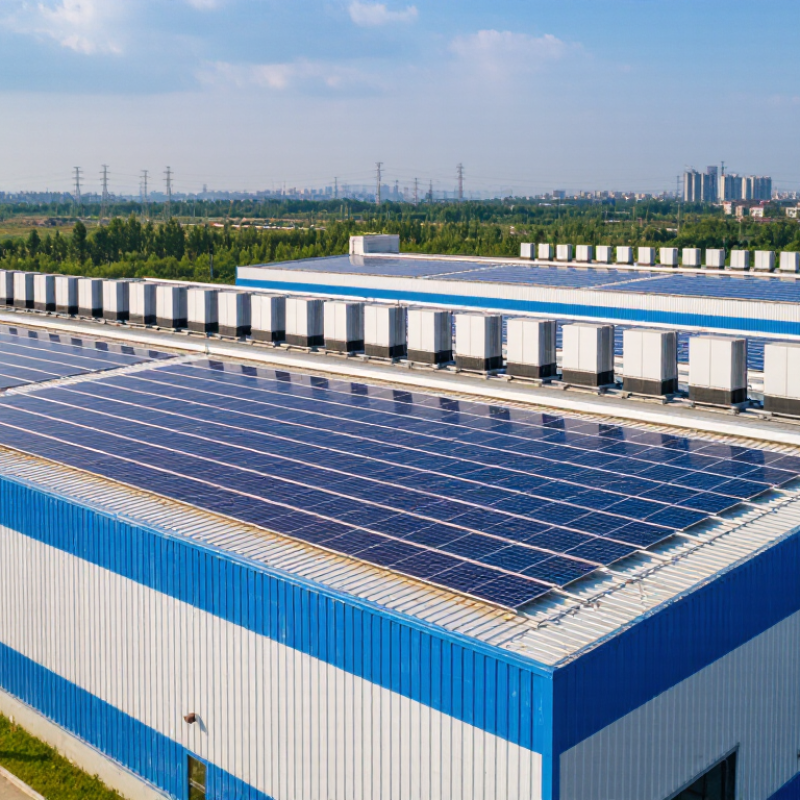
For global buyers, a solar power electric system is more than panels on a roof. It is an engineered network that produces, controls, stores, and distributes electricity.
Solar modules convert sunlight into direct current (DC). An inverter changes that DC power into alternating current (AC) for household appliances, factories, or commercial buildings.
The system may also include batteries, charge controllers, protection devices, cables, mounting structures, and monitoring equipment. It is not magic.
In a typical installation, mounting rails hold modules at a suitable angle and protect them from strong winds. A charge controller manages battery charging and helps prevent excessive discharge. Meters and monitoring tools show energy production, battery status, and unusual performance changes.
Grid-connected systems can work with public electricity networks, while stand-alone systems need enough storage for cloudy periods and nighttime demand. Small design errors can cause noticeable losses.
Global buyers should examine local sunlight, roof conditions, temperature, humidity, and grid requirements before selecting equipment. A hot coastal site may require corrosion-resistant materials and careful ventilation.
Cold climates can improve panel output but may create snow and cable-management challenges.
Qualified designers should calculate daily loads, seasonal production, backup time, and future expansion. They should also verify safety documentation, warranty terms, installation records, and applicable IEC test reports.
Real output rarely matches a perfect laboratory figure, so cautious estimates are more reliable. Planning is rarely perfect. Testing the system after installation still matters.
Solar power electric systems convert sunlight into usable electricity through several connected stages. Photovoltaic cells inside solar panels release direct current when sunlight strikes their semiconductor layers. More sunlight usually increases output, but heat, dust, and shade can reduce performance.
An inverter changes direct current into alternating current for household appliances and commercial equipment. Modern inverters track the panels’ maximum power point, helping capture energy during changing weather. A battery can store excess electricity for evening use or backup power. Without a battery, unused energy may flow to the grid, depending on local regulations and the approved connection agreement.
A practical system also includes mounting rails, cables, switches, fuses, grounding, and surge protection. These parts are not decorative details. They influence safety, maintenance, and long-term reliability. During site assessments, technicians should check roof direction, shading patterns, structural strength, and local voltage requirements. A simple sunlight estimate can still mislead if winter shadows are ignored. That is an easy mistake to make.
Global buyers should review tested component specifications, installation manuals, warranty terms, and relevant electrical certifications. Monitoring software can show daily production and reveal sudden drops caused by loose connections or accumulated dirt. Professional installation matters because poor cable routing may create heat or water-entry risks. Solar power is dependable when the design matches the site, but it is not completely maintenance-free.
| System Dimension | How It Works | Typical Technical Data | Value for Global Buyers |
|---|---|---|---|
| Solar Photovoltaic Modules | Semiconductor cells convert sunlight directly into direct-current electricity through the photovoltaic effect. | Commercial modules commonly provide approximately 400–600 W per panel, with module efficiencies often in the 19%–23% range. | Scalable generation capacity supports residential, commercial, agricultural, and remote-site applications. |
| Mounting Structure | Aluminum or galvanized-steel structures secure modules at an appropriate tilt and orientation while allowing ventilation and maintenance access. | Fixed-tilt systems are common; the optimum angle depends on latitude, roof geometry, local wind, snow, and structural conditions. | Adaptable designs can meet different roof types, ground conditions, climate zones, and building standards. |
| DC Wiring and Protection | Cables carry electricity from module strings to the inverter, while fuses, disconnects, and surge protection help manage electrical faults and transient voltage. | System voltage is commonly designed around 600 V or 1,000 V DC, depending on local regulations and system scale. | Correct protection and cable selection improve safety, reduce losses, and simplify compliance with local electrical codes. |
| Inverter | The inverter converts variable DC electricity from the array into alternating-current electricity for appliances, buildings, or the utility grid. | Typical peak conversion efficiencies are approximately 96%–99%, depending on design, load, and operating conditions. | Grid compatibility, monitoring functions, and available voltage configurations support deployment across different markets. |
| Maximum Power Point Tracking | The inverter continuously adjusts electrical operating conditions so the solar array can produce near its maximum available power as sunlight and temperature change. | Separate tracking channels can help reduce mismatch losses caused by different roof orientations, shading patterns, or module strings. | Improves energy harvest where installations have varied orientations or partial shading. |
| Battery Energy Storage | A battery stores surplus electricity and supplies it later when solar production is low or demand is high. | Lithium-ion systems commonly achieve approximately 85%–95% round-trip efficiency; usable capacity depends on the battery-management settings. | Supports backup power, time-of-use energy management, self-consumption, and operation in areas with unreliable grids. |
| Energy Management System | Software and controls prioritize solar generation, battery charging, household or facility loads, and grid exchange according to programmed settings. | Common functions include remote monitoring, production records, fault alerts, load control, and battery state-of-charge reporting. | Enables performance visibility and easier operation across multiple sites and time zones. |
| Grid-Connected Operation | Solar electricity serves local loads first; excess production may be exported where local interconnection rules permit, while the grid supplies shortfalls. | Operation requires approved protection, voltage and frequency control, metering, and utility interconnection procedures. | Can reduce purchased electricity while maintaining grid access when solar output varies. |
| Off-Grid or Hybrid Operation | Solar modules charge the battery and supply loads through an inverter; a generator or grid connection can provide additional energy when required. | System sizing depends on daily energy demand, peak load, solar resource, autonomy requirements, and backup availability. | Provides electricity for remote homes, telecommunications, farms, islands, and facilities with limited grid access. |
| Energy Yield | Annual output depends on solar irradiation, system size, orientation, temperature, shading, soiling, availability, and electrical losses. | A broad planning range is approximately 1,000–2,000 kWh per installed kW of PV per year, depending strongly on location and design. | Local solar-resource assessments are essential for accurate production forecasts and financial planning. |
| Environmental Performance | Solar systems generate electricity during operation without direct combustion emissions at the point of generation. | PV life-cycle emissions are generally much lower than those of fossil-fuel electricity, although manufacturing, transport, and recycling require resources. | Helps organizations reduce operational emissions and improve renewable-energy targets when supported by responsible sourcing. |
| Maintenance and Service Life | Maintenance typically includes visual inspections, cleaning when necessary, electrical checks, monitoring review, and replacement of components that reach the end of service life. | PV modules are commonly designed for service periods of 25 years or more; inverters and batteries generally require earlier assessment or replacement. | Long operating periods and modular maintenance can support predictable ownership costs when after-sales service is available. |
Note: Technical ranges are general planning values. Actual performance depends on local climate, system design, installation quality, operating conditions, applicable standards, and maintenance practices.
Global buyers choose solar power electric systems for practical, measurable benefits. Solar modules can generate electricity close to homes, factories, farms, and remote facilities. This reduces dependence on long transmission networks and unstable fuel prices. The International Energy Agency reported nearly 420 gigawatts of new solar photovoltaic capacity worldwide in 2023. That scale shows strong market confidence and rapidly improving supply chains.
Solar systems also offer modular investment. Buyers can begin with rooftop panels, then add battery storage or extra capacity later. The International Renewable Energy Agency recorded 1,419 gigawatts of global solar capacity by the end of 2023. Solar projects usually require limited routine maintenance after installation. They can also reduce operational emissions, supporting corporate climate targets and cleaner local air. In field projects, digital monitoring helps technicians identify dust buildup, loose connections, or unusual output before failures become expensive.
The economics are not perfect. Initial equipment, installation, permits, and storage can create serious budget pressure. Solar output also changes with clouds, seasons, and nighttime demand. A system designed only from annual sunlight data may perform poorly during winter peaks. Buyers should examine hourly consumption, local grid rules, warranties, recycling arrangements, and installer qualifications. The IEA notes that grid integration and storage remain important challenges as solar deployment expands. Good decisions therefore depend on site measurements, transparent financial assumptions, and realistic maintenance planning—not attractive payback claims alone.
Why Choose Solar Power Electric Systems for Global Buyers?
Which Factors Should Buyers Consider Before Purchase?
Solar power systems can reduce grid dependence, but purchase decisions need practical evidence. A roof may look suitable, yet afternoon shade can reduce production. Buyers should check roof direction, pitch, surface condition, and local sunlight levels. Measure it carefully. Recent electricity bills also reveal daily demand and seasonal changes. A home using air conditioning needs a different system from a small workshop.
Technical details deserve close attention. Compare panel efficiency, inverter capacity, battery storage, cycle life, and safety certifications. Do not trust peak output alone. Ask for estimated annual generation under local weather conditions. A written proposal should explain equipment performance, installation work, monitoring, and maintenance costs. Qualified installers should understand local electrical rules and permit requirements. Their experience matters. If projected savings seem perfect, question the assumptions behind them.
Climate and service access can change the real value of a system. Coastal buyers should examine corrosion resistance, while snowy regions need suitable mounting and maintenance plans. Hot climates can reduce battery performance. Check warranty periods, labor coverage, replacement procedures, and the availability of qualified technicians. Ask who responds when the inverter fails. Financing also requires care because interest can make a low monthly payment expensive. I have seen buyers focus on panel prices and overlook installation quality. That is an easy mistake. Future electricity prices are uncertain, so conservative estimates are safer than attractive promises.
Choosing the right solar power system requires more than comparing panel prices. A suitable design must match your energy habits, site conditions, and local regulations. Start by reviewing twelve months of electricity bills. Note daytime demand, evening usage, seasonal changes, and planned equipment additions.
In practical site assessments, roof direction, shading, wind exposure, and temperature affect system performance. A shaded roof may need a different layout or a ground-mounted option. Buyers should also decide whether they need battery backup, grid connection, or both. Battery size depends on essential loads, outage length, and daily consumption. Oversizing can waste money, while undersizing may cause disappointment. No design is perfect. A careful review is still worthwhile.
Tips: Request a written energy calculation, equipment datasheets, warranty terms, and installation details. Check whether the system meets recognized safety standards and local electrical codes. Ask for maintenance procedures and realistic performance estimates, not only ideal laboratory figures. Compare installer experience with similar climates and building types. A reliable provider should explain limitations clearly and identify assumptions in the proposal. Keep space for future expansion, but confirm that the inverter and wiring can support it. Small details matter, such as cable protection, battery ventilation, monitoring access, and emergency shutdown instructions.
It converts sunlight into electricity for homes, factories, or commercial buildings. Panels produce direct current, while an inverter creates usable alternating current. Batteries, cables, protection devices, and monitoring tools may also be included. It is not magic.
Panels produce less energy during clouds and none at night. Grid-connected systems can use public electricity when solar output falls. Stand-alone systems need enough battery storage for nighttime demand and cloudy periods. Storage planning can be imperfect.
Check roof direction, pitch, surface condition, shading, wind exposure, and local sunlight. Afternoon shade can reduce production noticeably. Coastal sites may need corrosion-resistant materials. Snowy areas require suitable mounting and maintenance plans.
Review twelve months of electricity bills before choosing equipment. Compare daytime demand, evening use, seasonal changes, and planned appliances. Request annual estimates based on local weather. Laboratory figures are rarely achieved in daily conditions.
Battery size depends on essential loads, outage length, and daily consumption. A larger battery may waste money if demand is low. A smaller battery may end backup too early. Measure real needs carefully.
Compare panel efficiency, inverter capacity, battery cycle life, protection features, and safety documentation. Check cable protection, battery ventilation, monitoring access, and emergency shutdown instructions. Peak output alone is not enough.
It should explain energy calculations, equipment specifications, installation work, monitoring, maintenance, and expected performance. It should also identify assumptions clearly. Attractive savings deserve questions. Perfect projections may hide weak estimates.
Ask about installer experience with similar buildings and climates. Confirm warranty periods, labor coverage, replacement procedures, and technician availability. Check local permits and electrical requirements. Ask who responds when the inverter fails.
Future expansion can be useful, but it requires compatible inverters, wiring, roof space, and mounting structures. Confirm capacity before installation. Extra space alone does not guarantee easy expansion. Small details matter.
Solar Power Electric systems convert sunlight into usable electricity through photovoltaic panels, an inverter, and supporting components such as batteries, controllers, and mounting structures. During daylight, solar panels generate direct current, which the inverter changes into alternating current for homes, businesses, or other facilities. Excess energy may be stored for later use or supplied to a connected electrical network, depending on local conditions and system design.
For global buyers, these systems can reduce dependence on conventional energy, lower long-term operating costs, support energy independence, and help reduce environmental impact. Before purchasing, buyers should evaluate local sunlight levels, electricity demand, available installation space, storage requirements, equipment quality, warranty coverage, maintenance needs, safety standards, and regional regulations. Choosing the right Solar Power Electric system requires matching system capacity and configuration to actual energy needs while considering climate, budget, future expansion, installation expertise, and reliable after-sales support.
Linde Cable