Industry-standard solutions for global power and communication networks
The Backbone of Modern Electrification and Connectivity
In the contemporary industrial landscape, wire and cable materials act as the "nervous system" of global infrastructure. As of 2024, the global cable market is witnessing a paradigm shift driven by the Energy Transition, Digital Transformation, and Urbanization 2.0. China, as a leading global material supplier, has transitioned from high-volume production to high-value innovation, meeting stringent international standards such as IEC, UL, and VDE.
With the rise of smart grids and electric vehicle (EV) infrastructure, the demand for specialized conductive materials has increased by 15% annually. High-purity copper and aluminum alloys are now essential for reducing transmission losses.
The industry is moving toward "Green Cables." Low Smoke Zero Halogen (LSZH) materials are no longer optional but mandatory in public construction projects to minimize toxic emissions during fires.
High Voltage Direct Current (HVDC) technology is redefining long-distance energy transport, necessitating advanced insulation materials capable of withstanding extreme thermal and electrical stress.
A Legacy of Quality and Engineering Excellence Since 2006
Linde Cable Co., Ltd. has established itself as a premier manufacturer specializing in the production of high-quality wires and cables. With 18 years of industry experience, we serve critical sectors including power transmission, telecommunications, civil construction, and renewable energy. Our commitment to E-E-A-T (Experience, Expertise, Authoritativeness, and Trustworthiness) is reflected in our rigorous adherence to international IEC standards and our partnership with global giants like the State Grid.
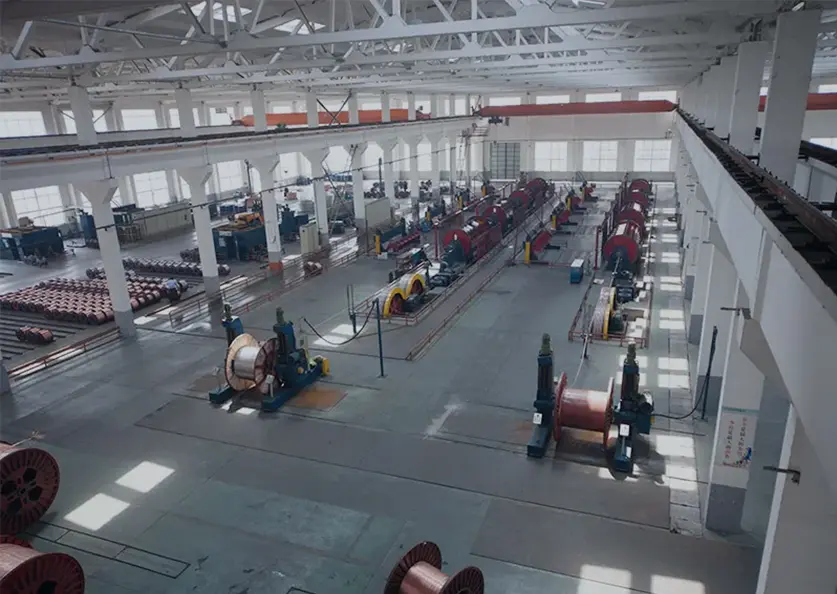
Operating out of Wuxi, Jiangsu, we leverage advanced manufacturing technologies and 15 professional production lines to ensure that every kilometer of cable exceeds expectations for safety and performance.
Decoding the Next Generation of Material Science
The future of China's material supply chain lies in intelligent manufacturing and molecular-level material optimization. As we look toward 2030, several key technological routes are emerging:
Research into Graphene-enhanced copper is set to revolutionize energy efficiency. By integrating carbon nanomaterials, we can reduce resistive heating by up to 10%, significantly impacting global carbon footprints.
Future cable systems will integrate fiber-optic sensors directly into the sheath, allowing for real-time monitoring of temperature, strain, and partial discharge. This "Internet of Cables" will prevent blackouts before they occur.
Transitioning from petroleum-based PVC to bio-polymers derived from renewable feedstock is a primary goal for the next decade, ensuring that the cable industry aligns with the Circular Economy.
Real-World Impact Across Global Projects
Linde Cable promoted the construction of 1,930km of lines across 10 Brazilian states, integrating them into the national grid. This required cables capable of withstanding tropical humidity and high UV exposure.
In Indonesia and Thailand, our fire-resistant and halogen-free cables power logistics parks and new energy factories, ensuring operational safety in dense industrial zones.
Supplying cables that maintain performance in extreme temperatures and high UV environments. Our solutions have been critical for power stability in harsh desert and savanna climates.
Providing over 20 million RMB worth of wiring for the Chongzuo Traditional Chinese Medicine Hospital, ensuring safe power supply for outpatient, inpatient, and critical care units across 150,000sqm.
Addressing Core Concerns of Global Procurement and Engineering Professionals
Explore our full range of certified industrial cables
 Linde Cable