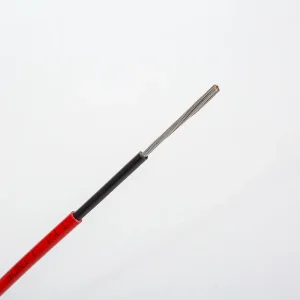
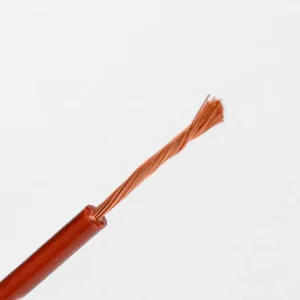
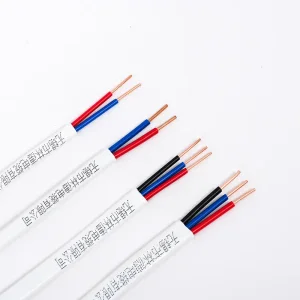
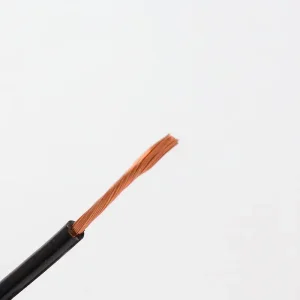
The global power and cable industry is undergoing a paradigm shift driven by the transition to renewable energy sources and the digitalization of power grids. Modern industrial requirements now demand cables that offer not only high conductivity but also resilience against environmental stressors—UV radiation, extreme temperature fluctuations, and moisture. Our 60227 IEC series products are engineered to exceed these demands, ensuring grid stability in challenging environments ranging from desert solar parks in Pakistan to logistics hubs in Southeast Asia.
“Made in China” has evolved into “Smart Manufacturing in China.” We integrate Factory 4.0 principles by deploying AI-driven monitoring in our extrusion lines. This allows for real-time quality control, ensuring that every batch of IEC-standard cables maintains uniform thickness and insulation integrity. This technological leap provides global buyers with unparalleled supply chain resilience—reducing lead times and guaranteeing consistent, high-performance output even during global market volatility.
Cables optimized for photovoltaic (PV) systems, ensuring minimal energy loss in high-temperature environments, critical for solar farms in tropical climates.
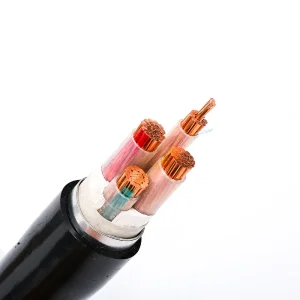
Flame-retardant and low-smoke cables for high-density logistics centers and commercial complexes, prioritizing safety and compliance with international fire standards.
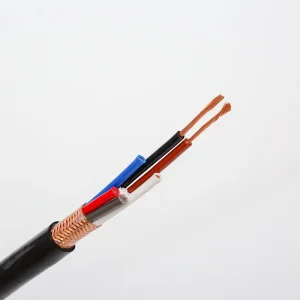
Heavy-duty electromechanical cables designed for highway lighting, traffic management systems, and rail infrastructure, requiring high mechanical strength.
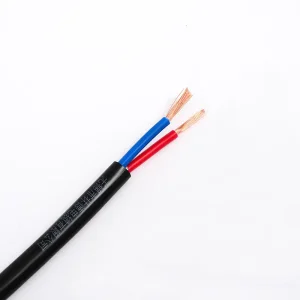
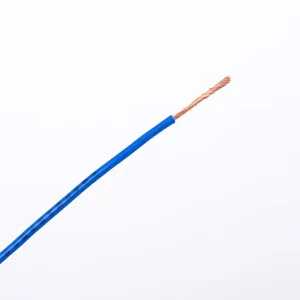
High-flexibility PVC-sheathed cables for internal wiring, optimized for ease of installation in compact conduit systems.
Q: What makes China-manufactured cables competitive for international tenders?
A: Chinese manufacturers, like Linde Cable, leverage economies of scale combined with advanced R&D. By adhering strictly to IEC international standards, we provide a price-to-performance ratio that is difficult for regional players to match, backed by robust logistics networks.
Q: How do you handle customization for specific regional environments?
A: We utilize environmental simulation testing. For example, our cables exported to Southeast Asia and the Middle East are formulated with specific UV-resistant and moisture-blocking additives, tested to withstand 90°C conductor temperatures.
Supported the construction of over 1,930km of transmission lines across 10 states, integrating renewables into the national grid.
Provided certified fire-resistant cabling for major e-commerce live-broadcast bases and storage centers in Thailand.
Engineered customized desert-grade cables designed to withstand extreme diurnal temperature fluctuations.
 Linde Cable