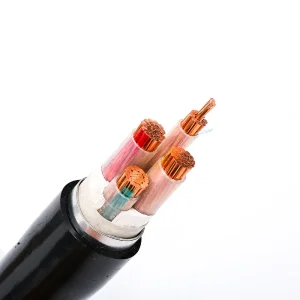
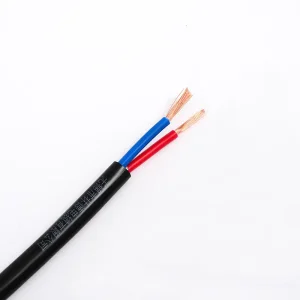
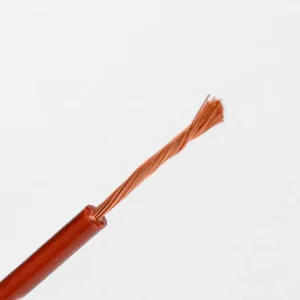
Aluminum Conductor Steel Reinforced (ACSR) remains the backbone of global power transmission infrastructure. As we transition into an era dominated by renewable energy integration and rapid urbanization, the demand for high-performance ACSR conductors has shifted from a commodity requirement to a critical engineering specification. Understanding the nuances of ACSR—where an aluminum outer layer provides conductivity and a steel core provides the necessary mechanical strength to span long distances—is vital for procurement managers and utility engineers.
Global energy transition plans require conductors that can withstand extreme weather fluctuations. From the high-heat, high-UV environments of African solar farms to the high-humidity, typhoon-prone regions of Southeast Asia, ACSR is not a "one size fits all" product. Modern manufacturing must account for corrosion resistance, sagging characteristics, and thermal expansion coefficients to ensure decades of uptime.
The paradigm of Chinese manufacturing has undergone a metamorphosis. Moving beyond traditional low-cost production, the "Factory 4.0" initiative integrates AI-driven quality control (QC) and automated production lines to deliver unprecedented consistency in wire and cable manufacturing. For global wholesalers, this means:
The contemporary procurement landscape is driven by "Value-Based Sourcing." Global enterprises are no longer looking for the cheapest quote; they are prioritizing "Total Cost of Ownership (TCO)." This includes longevity, installation ease, and the manufacturer's ability to provide technical support for complex deployments. Whether it is for State Grid projects in South America or logistics parks in Thailand, the emphasis is on local adaptation—customizing cable properties to suit regional climatic challenges.
ACSR offers a superior strength-to-weight ratio. The steel core provides the tensile strength required for long spans, making it ideal for high-voltage transmission lines where sag must be minimized, whereas AAC (All Aluminum Conductor) is typically used for shorter distribution spans.
We utilize specialized UV-stabilized insulating materials and anti-corrosive grease for the steel core. This prevents oxidation and degradation in high-humidity and high-temperature environments, ensuring a lifespan exceeding 30 years.
With our Factory 4.0 infrastructure, we manage a lean manufacturing cycle. Standard stock products ship within 7 days, while customized OEM orders typically process within 2-4 weeks, depending on volume and specification complexity.
 Linde Cable