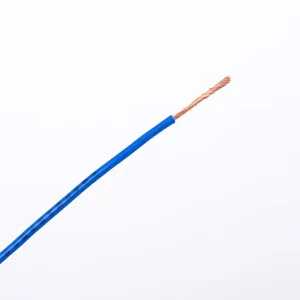
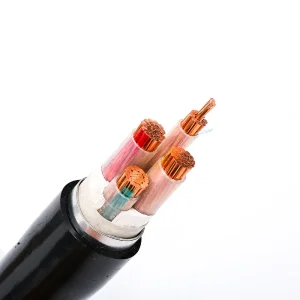
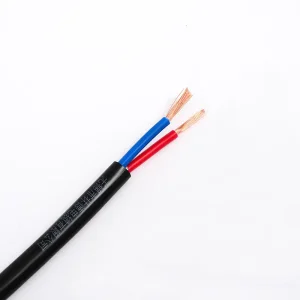
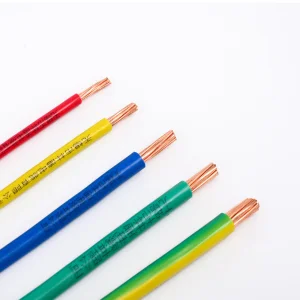
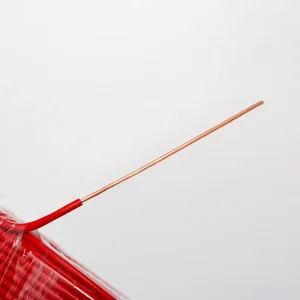
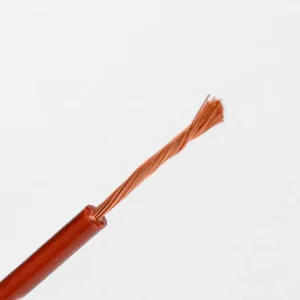
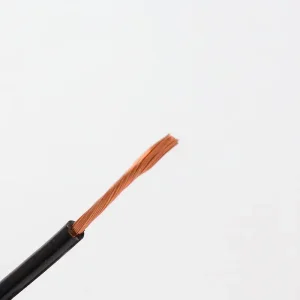
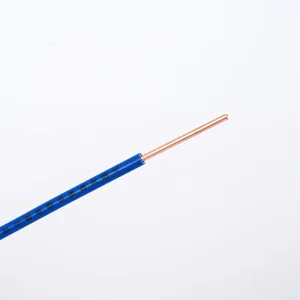
In the electrical engineering ecosystem, "Current Carrying Capacity" (often termed Ampacity) is the foundational metric for safety and efficiency. As a leading manufacturer, we define ampacity not just by the cross-section of the copper conductor, but by its thermal equilibrium in real-world environments.
The standard rating of a cable is often calculated under ideal laboratory conditions (e.g., 30°C ambient temperature). However, in actual industrial applications—such as crowded conduits, underground burial, or high-temperature factory environments—ampacity requires derating. Our engineering team utilizes advanced thermodynamic modeling to guide clients in selecting the optimal conductor size to prevent insulation degradation and energy loss.
Linde Cable leverages the robust Wuxi industrial cluster to offer unmatched lead times and competitive pricing. Our vertically integrated production lines—from copper drawing to extrusion—ensure we control every micron of the manufacturing process. This resilience allows us to bypass global supply chain volatility, ensuring our partners in Southeast Asia, the Middle East, and beyond receive shipments with consistent reliability.
The shift toward renewable energy and smart grids demands cables that go beyond standard requirements. Our R&D roadmap focuses on:
Navigating international standards like IEC 60227 is critical. Whether it is adapting to the specific humidity levels of tropical industrial parks in Thailand or the high-UV environments of desert PV plants in Pakistan, our products are engineered to conform to local regulatory bodies while maintaining the universal quality benchmarks of IEC certification.
A1: Ampacity is determined by the load current, voltage drop limitations, and ambient conditions (grouping factor, ambient temperature, and installation method). Contact our technical team with your project specifications for a customized load calculation.
A2: Copper offers superior conductivity and durability. For critical infrastructure where space is limited and reliability is paramount, copper’s higher current density and corrosion resistance make it the standard choice.
A3: Every batch undergoes thermal cycling tests to ensure the insulation maintains integrity at the rated temperatures, and conductivity tests to verify the copper meets ASTM/IEC purity standards.
 Linde Cable